

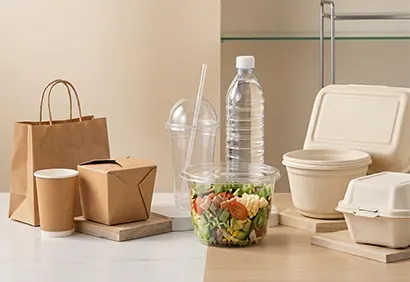
There is no single best packaging material. Paper, plastic and bagasse each perform well in different situations, and the right choice depends on what you are packing, how far it travels and how your customers will use it.
Start with the product
Begin by listing what the packaging has to do: hold liquid or grease, survive heat, stack in transport, stay sealed, or simply look good on a shelf. The answers quickly narrow the options.
Hot, oily or saucy food needs grease and moisture resistance. Products that must stay visible suit clear plastic. Dry goods and carry-out items often work well in paper. Single-use food service is a natural fit for molded fiber (bagasse).
Where each material fits
Paper
Paper is versatile and easy to print, which makes it popular for bags, wraps, cups and boxes that carry a brand.
Plastic
Plastic offers clarity, strong seals and moisture protection for deli, soup and cold-chain applications.
Bagasse (molded fiber)
Bagasse, made from sugarcane fiber, is used for plates, bowls, trays and clamshells in food service.
Think about the whole journey
Consider storage, stacking, transport and how the packaging will be disposed of in your market. Local recycling and composting options can differ, so check what applies where your customers are.
Mixing materials in one order
Most businesses need more than one material. Sourcing paper, plastic, bagasse and aluminum together keeps specifications consistent and lets products ship in the same consolidated order.